
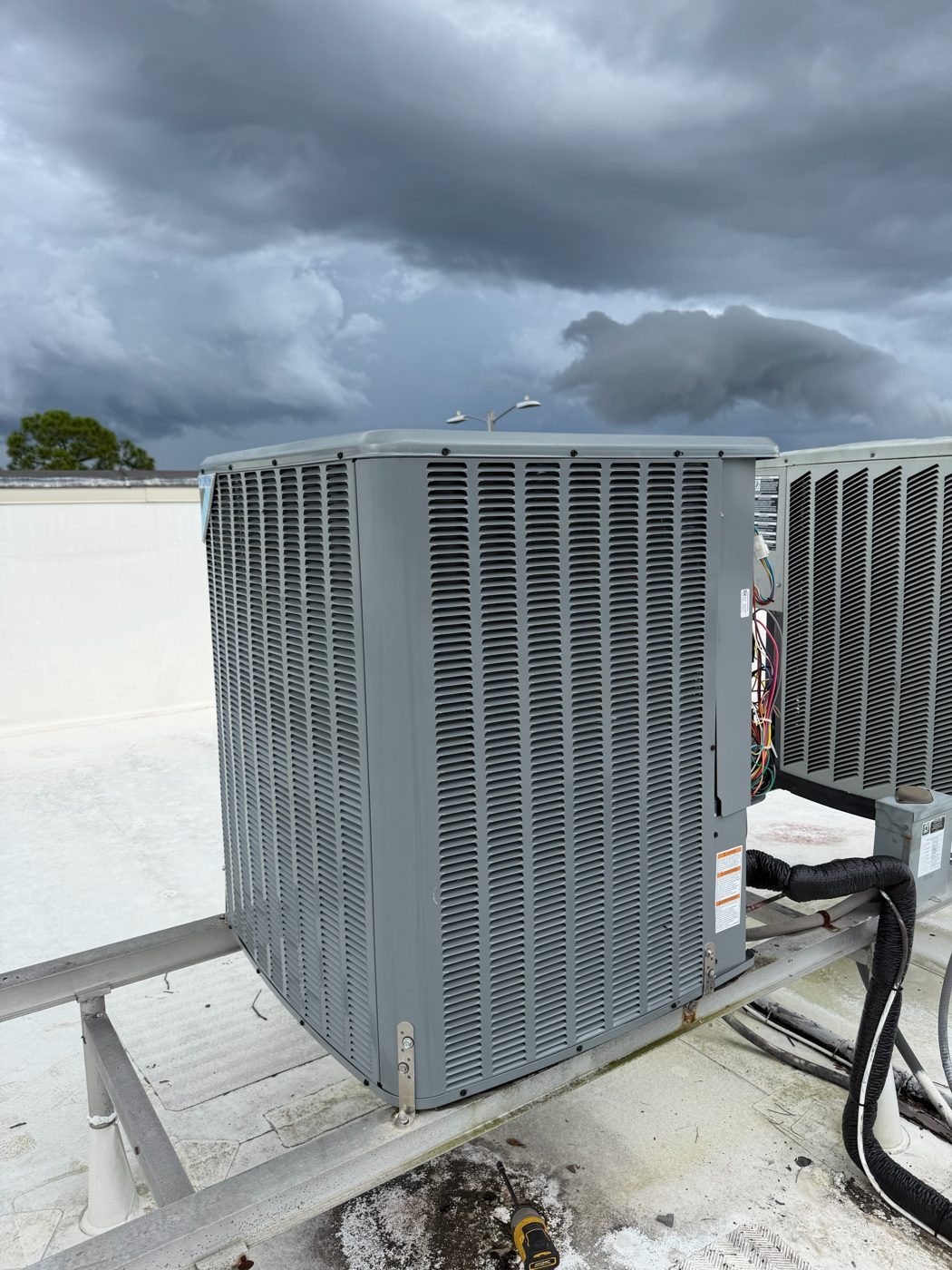
Hurricane season is part of life in Tampa Bay. Most of us know to stock water and check our shutters, but your air conditioner deserves a spot on the checklist too. Wind, flying debris, flooding, and power surges can all damage HVAC equipment. A little preparation can help protect your system and get you back to comfort faster after the storm.
Before the Season: Get Ahead of It
The best time to prepare is before a storm is on the way.
- Schedule maintenance. A system in good shape is better ready to handle the stress of outages and restarts. A technician can also spot loose parts or worn electrical components.
- Check the outdoor unit’s mounting. Make sure the condenser sits level and secure on its pad. Ask your technician whether hurricane straps or tie-downs are right for your unit.
- Consider surge protection. Power surges when electricity drops and returns can damage sensitive electrical parts. Ask a licensed professional about surge protection options for your system.
- Trim trees and shrubs. Cut back branches that hang over or near the outdoor unit.
- Take photos. Photograph your equipment and keep model and serial numbers handy for insurance purposes.
When a Storm Is Coming
Once a storm is in the forecast:
- Clear the area. Move patio furniture, grills, toys, and anything else that could become flying debris and hit your unit.
- Pre-cool your home. Run the AC a bit cooler before the storm arrives so your home stays comfortable longer if the power goes out. Close blinds to keep heat out.
- Turn off the system before the storm hits. When high winds arrive or an outage looks likely, turn the system off at the thermostat and at the breaker. This helps protect it from surges and from running while debris is flying.
- Don’t wrap it tightly. Covering the unit with a tarp during the storm can trap moisture. If you use a cover, remove it before you turn the system back on. Never run the AC with a cover on.
After the Storm: Restart Safely
Don’t rush to flip the AC back on.
- Look first. Walk around the outdoor unit. Check for debris, bent fins, damage, or anything leaning against it.
- Check for flooding. If water reached the outdoor unit or the indoor air handler, do not turn it on. Water can damage electrical parts and create a safety hazard. Have a licensed technician inspect it first.
- Clear debris. Gently remove leaves, branches, and trash from around the unit.
- Wait for stable power. After power returns, give it some time to stabilize before restarting.
- Turn it back on. Switch on the breaker, then the thermostat. Listen for unusual noises and watch for weak or warm airflow.
Signs You Need a Professional
Call a technician if you notice:
- The system won’t turn on or trips the breaker
- Strange noises, burning smells, or sparks
- Warm air from the vents
- Visible damage to the unit, refrigerant lines, or wiring
- Any sign the equipment was under water
Never try to open up the unit or work on electrical parts yourself. Storm damage can create hidden hazards.
Plan Ahead for Comfort
After a storm, many homeowners need service at the same time. Taking care of maintenance early in the season and knowing who to call can save you time and stress when it matters most.
Need a Hand? Call WeCool Air & Heat
WeCool Air & Heat, LLC (formerly Fernandez Services, LLC) is a licensed and insured HVAC contractor (FL License CAC1819346) based in Odessa, FL, serving homeowners across Pasco, Pinellas, and Hillsborough counties. We install, repair, and maintain Goodman, Trane, and Daikin systems.
Call us at 813-505-0104 or send us a message on our contact page. Hours: Monday–Friday 8 AM–6 PM, Saturday 8 AM–12:30 PM, closed Sunday.
Leave a Reply